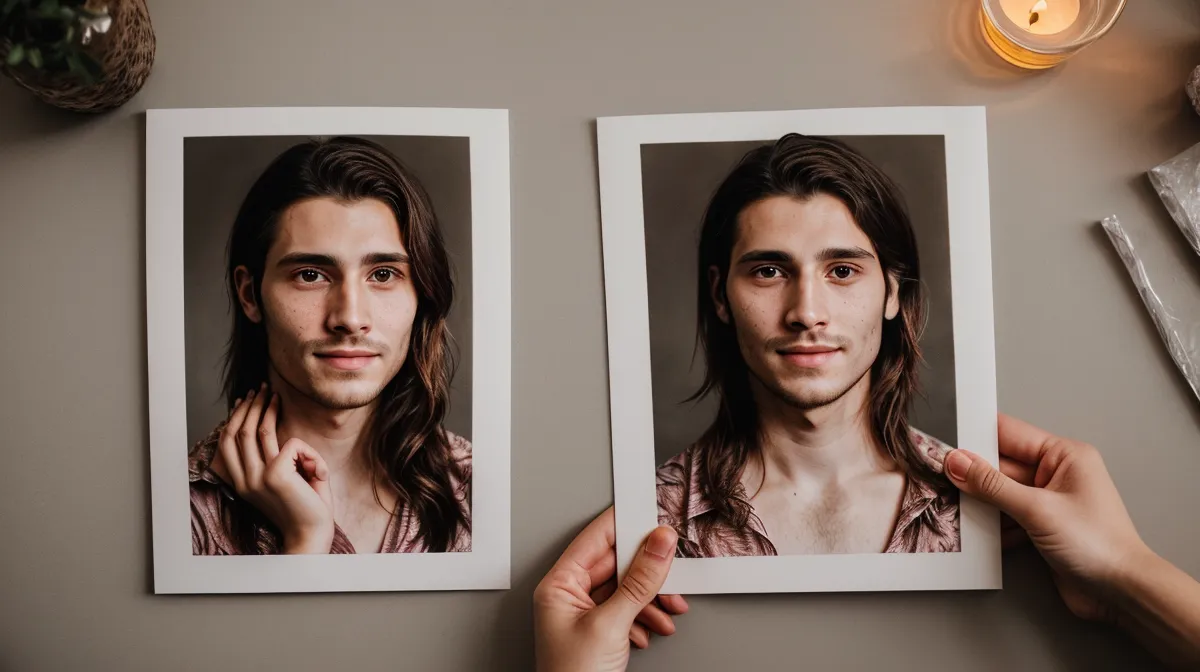
A soulmate sketch and a courtroom sketch get compared constantly, and they're built for completely different jobs. One exists to help a room full of strangers pick a specific face out of a lineup. The other exists to make you feel something on a rough Tuesday, not to identify anyone — which is exactly where most of the confusion starts. My honest answer, after ordering four of these drawings from four different services and comparing every detail down to the eyebrows, is yes: a soulmate sketch can help you recognize your soulmate, just not in the literal, feature-matching way people assume going in. It ends up being less palm-reading and more personal growth exercise with a nice piece of art attached.
Readers and friends ask me some version of the same handful of questions every time the phrase Soulmate Sketch Lady comes up, so here they are, answered as straight as I can manage, based on four separate service reviews rather than one lucky draw.
What Is a Soulmate Sketch, and What Isn't It?
A soulmate sketch is a drawing (digital or hand-rendered, depending on the artist) made by a psychic or intuitive artist based on impressions they say they're picking up about your future partner, usually paired with a written personality description. That's the whole mechanism. It is not a photograph, not a police-style identification tool, and not a guarantee that a person matching the drawing shows up at your door on any set timeframe. What these services actually are and how they position themselves is a longer conversation on its own; the short version above is enough to work from here.
Delivery windows vary a lot between services — some promise same-day turnaround, others take considerably longer, and I've ranked how the wait times actually played out in more detail elsewhere. One of the four services I used took noticeably longer to respond whenever I had a follow-up question, and that communication gap ended up being my single biggest letdown across all four experiences. What matters more than the wait, though, is what you bring to the reading before you even place the order — your expectations, your headspace, whether you're ordering as a joke during a rough week or hoping for something closer to real guidance. That mental prep matters more than people give it credit for, and it's worth thinking through before you click purchase.
Comparing Four Sketches Side-by-Side: What Actually Changed
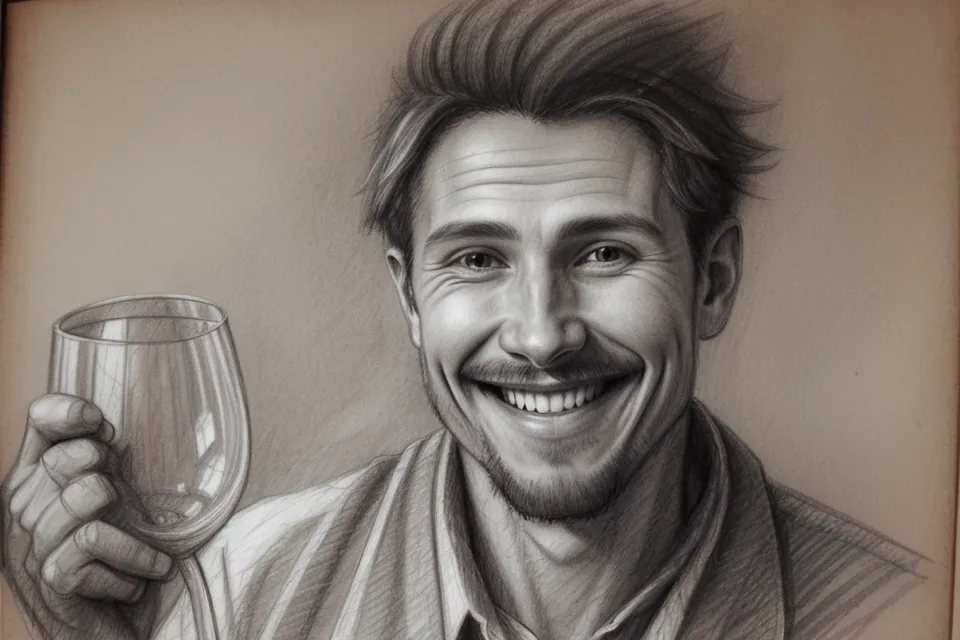
Four services, four completely different artistic approaches — that's what jumped out once every sketch sat in front of me at the same time. One artist worked in a soft, almost ethereal digital style. Another leaned into heavy charcoal-style shading that looked closer to a traditional hand-drawn portrait, and that digital-versus-hand-drawn divide turns out to be its own conversation I won't fully unpack here. I've written about the truth about psychic soulmate sketches and how the experience varies by service, if the short version leaves you wanting the long one.
The pattern that mattered more than any individual face, though, was pareidolia — the tendency to find meaningful patterns in random or ambiguous information. Once I wanted to see "my person" in a set of pencil lines, I started finding him everywhere: a similar nose shape, a similar expression, a similar vibe. That's not a knock on the artists. It's just useful to know going in, because it explains why two people can stare at the exact same sketch and walk away with wildly different levels of conviction that it "looks like someone."
How Does the Sketch Process Actually Work?
Every artist I ordered from described their process a little differently, but the throughline stayed consistent: they're working from impressions rather than a physical description you hand over, and the psychic sketch process is worth reading in full if you want the mechanics behind it. The short version is that it's less about painting a literal photograph from a vision and more about translating a feeling into a face, which is a strange thing to sit with the first time you read it.
One thing worth separating out here, because people conflate them constantly: a soulmate sketch and a twin flame reading are not the same service, even when they get marketed side by side. Confusing the two terms is the fastest way to misread a sketch that was actually accurate, because you end up grading it against a completely different kind of connection than the one it was drawn for.
Accuracy Is the Wrong Thing to Optimize For
Here's the contrarian part. Chasing visual accuracy — trying to find a real person who matches the sketch feature for feature — can actually work against you. Get hyper-fixated on a specific nose or a specific hairline and you risk narrowing your attention to a fictional composite instead of staying open to an actual person standing in front of you, which is a fast way to slide into confirmation bias — noticing only the features that match and quietly ignoring everything that doesn't.
Recognition in real life demands looser accuracy criteria than a side-by-side comparison ever will, and that's the piece most people skip past when they're deciding whether a sketch "worked." There's also a longer conversation to be had about red flags in this industry — services that overpromise specificity, guarantee a match within days, or push another paid reading before the first one even lands — but that's a separate topic covered elsewhere in more depth.
The Difference Between Dating Intuition and Matching a Drawing
Before any of the sketches, I tried a tarot reading at a local shop, mostly out of the same curiosity, and it didn't land the way I expected; the reader's take on my love life felt generic enough to apply to half the people who'd walked through that door that week. The sketch felt different somehow, if only because it handed me an image instead of a vague sentence to project onto. During a wine night with friends, I pulled the first one up on my phone, and one of them — she'd just joined a competitive trivia league at a bar downtown and was mid-rant about her team's dismal standings — grabbed the phone out of my hand before I'd finished the sentence. She passed it down the table without a word. There was this small, stifled sound from someone near the end, not quite a gasp, more like a person catching themselves before reacting too big, and within a minute three separate phones were lighting up because I'd already screenshotted the thing and sent it to the group chat before I could second-guess it.
That reaction is the closest thing I have to proof these sketches tap into something real, even if "something real" just means a shared shorthand for what a kind face looks like. Dating intuition, not feature-matching, is the actual skill a sketch can sharpen if you let it — noticing warmth in a stranger's expression, or the way someone listens, instead of scanning for a nose shape memorized off a JPEG. That's the whole difference between recognizing someone and matching a drawing, and it's the part nobody mentions in the marketing copy.
My Honest Verdict After Four Sketches
Yes, a sketch can help you recognize your soulmate, just not as a literal photograph waiting to walk into your life. I've talked about how my fourth psychic portrait felt like a shift in energy, and across all four sketches, the value showed up less in matching a face and more in giving myself permission to stop measuring new people against an old one.
None of this makes me qualified to predict your love life, and I'd be lying if I said otherwise — I'm still just a person who got curious after a bad breakup and kept ordering drawings. If you're on the fence about trying one, treat it as a mood-lifter and a mirror for what you actually want, not a prediction with a face attached. Save the actual predicting for your own gut, and let the sketch do the smaller job it was always built for.