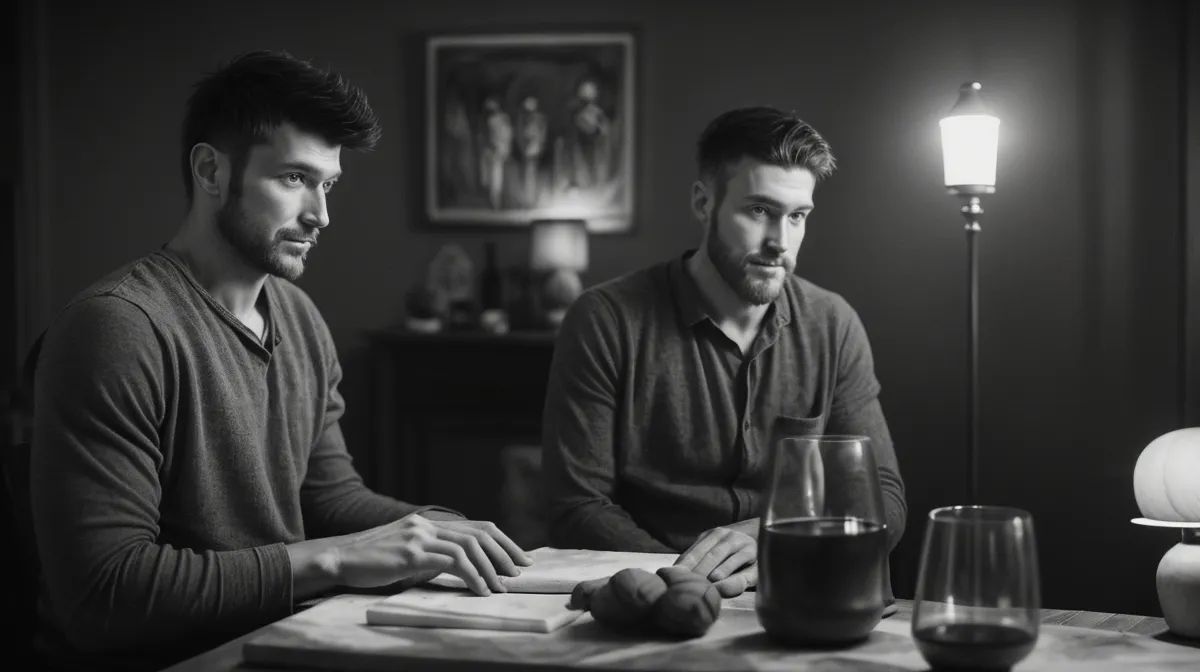
Four faces stare back at me from a corkboard above the sink, and every single one of them passed my own red-flag test for buying a soulmate sketch online — barely, in two cases.
That's four separate orders from four different services, and if you're brand new to the whole idea of a soulmate sketch itself, that's a separate explainer for another day — here, I'm assuming you already know the basic concept and just want to know what to actually watch for before you pay. I've also lined three of these services up against each other more formally elsewhere, comparing them side by side on speed and accuracy. This is more like the cheat sheet: the specific patterns that made me suspicious enough to start taking notes.
Before any of this started, I tried the thing every breakup article tells you to try — a thirty-day break from social media, no scrolling, no checking anything. It didn't take. I was back on my phone well before the month was up, which might be why ordering a slightly ridiculous psychic portrait during a wine night ended up sticking around as a coping mechanism when actual self-discipline didn't.
My day job is customer service — headset on, half my brain translating what people actually mean underneath their complaint. That instinct transfers surprisingly well to reading psychic sketch marketing, because after four orders I've built an unintended list of red flags — the same handful of patterns that show up across most online psychic scams — worth checking before you pay for a soulmate sketch, and none of them require believing or disbelieving in anything spiritual to spot.
The Sketch Arrived Faster Than My Coffee Order
One of my four sketches landed in my inbox while I was still standing in line for coffee — full shading, finished linework, done before my order number got called. A psychic moving fast isn't automatically suspicious. But nobody sketches a stranger's face, convincingly, from a description alone, in under an hour, regardless of how much caffeine is involved.

A rushed turnaround like that usually means one of two things — a template pulled from an existing folder, or an artist working through orders so quickly there's no room left for whatever process is supposed to shape a description into a specific face. I've written more about delivery times ranked across the different services if you want the full breakdown, but the short version holds up fine on its own: fast isn't a compliment here, it's a warning sign.
Look, I get the appeal of instant gratification — I've made grocery decisions based on which self-checkout line was shorter. But if you actually want to believe someone looked at your description and drew something specific, give the process room to feel like more than a vending machine transaction.
Duplicate Faces And Recycled Templates
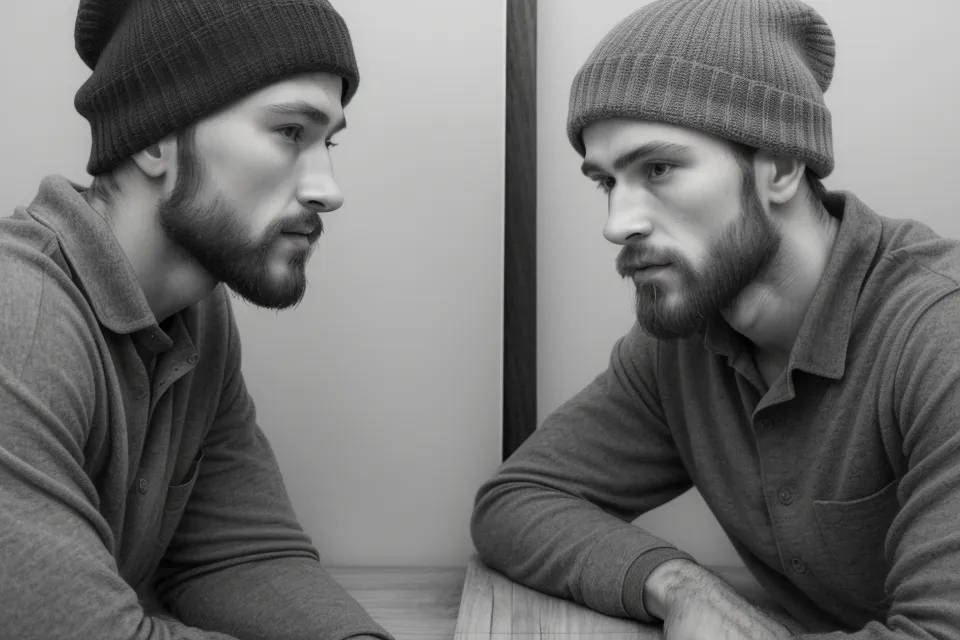
The clearest red flag I caught personally involved holding two sketches up at arm's length, phone screens glaring under the kitchen light, and realizing the jawline on one man matched a completely different "soulmate" from another service — same bone structure, same brow, just a different hat and a mirrored angle.
Naomi Ferris caught the pattern before I fully understood what I was looking at, honestly. She's an Instagram follower who's oddly good at noticing tiny visual details most people scroll past — a repeated earring shape, an eyebrow that's just slightly too specific to be coincidence — and she was the one who flagged that two supposedly unrelated portraits shared identical bone structure. Once she pointed it out, I couldn't unsee it. Backstory depth, or the lack of it, is its own separate rabbit hole, and I got into that more in The Soulmate Story Review: What I Actually Received and How It Compared to the Rest, where one service handed me a full paragraph of personality detail and another barely gave me a sentence.
My coworker Josephine used to roll her eyes at me over the pierogi she quietly brings into the office every Friday without ever announcing it — loudly unconvinced about the whole thing for months. Showing her two nearly identical templates side by side is what actually got her quiet. She ordered her own sketch that weekend, something she has never fully admitted was because of that conversation, but I know what I watched happen.
Does Your Reading Actually Say Anything Specific?
Every sketch I've ordered came bundled with a short personality write-up of my supposed future partner, and after four of them, the pattern got impossible to ignore: he's always got a "strong sense of justice," always "guarded but deeply loyal underneath," always someone who "enjoys deep conversation." Run those same lines past a room full of strangers and most of them would nod along, the same way almost anyone nods along to a horoscope app's daily forecast or one of those long personality quizzes that sorts you into a "type."
There's an actual name for this — the Barnum effect, where vague statements feel personal because they're built to apply to nearly anyone. Judging whether a reading is actually specific or just well-disguised guesswork is a longer conversation on its own, but the short test works fine: would this description surprise someone who actually knows you, or could it describe half your contact list?
When I'm ranking these against each other, like I did in Why I Can't Stop Comparing These Portraits: My Tina Aldea Soulmate Sketch Review, specificity is the thing I actually score on — a strange hobby, an odd scar, a job that isn't just "creative or business-minded." Vague is safe. Vague is also, usually, a red flag with decent branding.
A Hyper-Realistic Portrait Is Not A Compliment
Here's the one that surprises people every time I explain it: the sketch that looks the most like an actual photograph is usually the one to be most suspicious of, not the one that looks roughly hand-drawn. A sketch with visible pencil strokes or slightly uneven features reads as more human to me than something polished enough for a magazine ad. There's a whole separate argument about hand-drawn versus digital realism worth having on its own, but for red-flag purposes, hyper-realism is the actual tell.
There's a screenshot saved on my phone from two in the morning that I never bothered captioning, because I already knew exactly why I'd taken it — a "soulmate" portrait that looked suspiciously like a stock photo used to advertise vitamins. A reverse image search confirmed it within about a minute. That's part of the routine now: if a face looks too clean, too lit, too much like a professional headshot, it gets run through a reverse search before I let myself get attached to it.
Watch For The Upsell Waiting At Checkout
Almost every service I've used tried to add something extra at checkout — a "fast track" option, a "deeper connection" reading, some upgraded package that quietly implies the base version wasn't fully trying. If the psychic is already supposedly tuned into who I'm meant to end up with, I've never understood why that connection needs an upgrade tier. Either they saw something or they didn't.
Constant upselling during something that's supposed to feel a little magical turns it into a checkout flow with mood lighting. My rule now: if the base sketch doesn't do anything for me, no add-on is going to fix that after the fact.
Refund Policies: The Boring Red Flag Nobody Checks
The other thing worth checking before you pay — boring compared to duplicate jawlines, but arguably more useful — is the refund policy buried near the bottom of the page. Many of these services, especially the ones sold through ClickBank, advertise 60-day money-back guarantees, and a few stretch that out to a full 365 days. A service confident enough to offer that kind of window is telling you something different than one that only offers vague "satisfaction guaranteed" language with no actual mechanism behind it.
Reading every refund policy before clicking pay has become part of the routine, the same way I'd read the fine print on a delivery insurance claim at work. It's not romantic, but neither is getting stuck with a template face and no way to get your money back.
Around week five of treating this like an actual side project instead of a wine-night bit, I started keeping a mental checklist — not from one big realization, but because the same handful of problems kept showing up across different services: rushed delivery, recycled faces, vague readings, upsells, and refund policies nobody reads. That checklist is really the only thing worth taking from any of this.
Josephine and I were walking through the shops at Peddler's Village in Lahaska a few weeks back, her half-distracted by a vintage mirror she wanted, when she asked me point blank whether any of the four sketches actually looked like someone she'd recognize if she passed him on the street. Honestly, no. Not one. And that's fine — this was never about getting a photograph of a future husband. It turned into curiosity that stuck around, just with a much better sense of what a red flag looks like before handing over a card.
None of this requires deciding whether you believe in any of it. A rushed turnaround, a recycled face, a personality profile that could describe your mail carrier, an upsell at checkout, a refund policy with no teeth — those are just things worth noticing before you pay, whether you're doing this for a laugh during wine night or because some small part of you is genuinely curious. Keep your eyes open, and let your own corkboard fill up on your own terms.