A horoscope app tells you something vague about today. A psychic soulmate sketch tells you something oddly specific about your entire future love life - a face, a personality write-up, sometimes a guessed career - and it charges you for a claim you can't fact-check for years, if ever. That gap between vague-and-harmless and specific-and-unverifiable is where online divination services live, and it's exactly the kind of relationship curiosity that pulled me into ordering four different psychic soulmate sketches and comparing them like it was a part-time job.
Before any of this started, I'd redownloaded Hinge for about the fifth time, deleted it again inside a week, and decided that a stranger's imagined drawing of my future husband was somehow less depressing than another round of matching with guys holding fish. Cora, my college roommate, is the one who put the actual idea in front of me - she pulls up anything that sounds fun for about five minutes, commits fully, then forgets she ever mentioned it. She's the reason I clicked 'buy' on the first sketch. I'm the reason I kept going after she'd moved on to whatever came next.
The comparisons all happened in one spot: my kitchen table, which has been doing double duty as a desk since this whole thing started, under the one window that actually gets sun, over the sink, with a corkboard nearby that's slowly filled up with all four sketches pinned side by side. It's not glamorous. It's just where the actual work of squinting at four strangers' faces happens.
What 'Real' Actually Means Here
Here's the reframe that changed how I read all four sketches: asking whether a psychic soulmate sketch is real is really asking what standard of accuracy you agreed to before you handed over your information. Expect a literal photograph of a specific man you'll meet on a specific street corner, and every service fails that test, no exceptions. Expect a drawing built from someone's read on your energy, and all four of mine cleared that bar in some way, though none of them cleared it completely. There's a longer rubric elsewhere on what actually counts as an accurate sketch versus a good guess dressed up in charcoal, and I'm not re-running that whole test here - I just want to flag that 'is this real' collapses pretty fast once you ask 'real by what measure.'
How a Psychic Soulmate Sketch Actually Gets Made
Underneath the question of realness, the mechanics are simple. You fill out an intake form, an artist works from whatever you gave them, and a digital file plus a written personality description show up over email - usually faster than you'd expect, sometimes not. What a soulmate sketch is as a category, and how it differs from a plain tarot pull or an online personality quiz, has its own explainer that I won't repeat point for point here. Understanding how the psychic artist's process is supposed to work in the first place is the first step to telling a genuine attempt apart from a template, and that's worth reading before you decide any single sketch proves anything either way. Turnaround times vary more than people assume, too - mine landed anywhere from about a day to closer to a week, and where a given order falls on that range has an entire ranking of its own if you want the full picture.
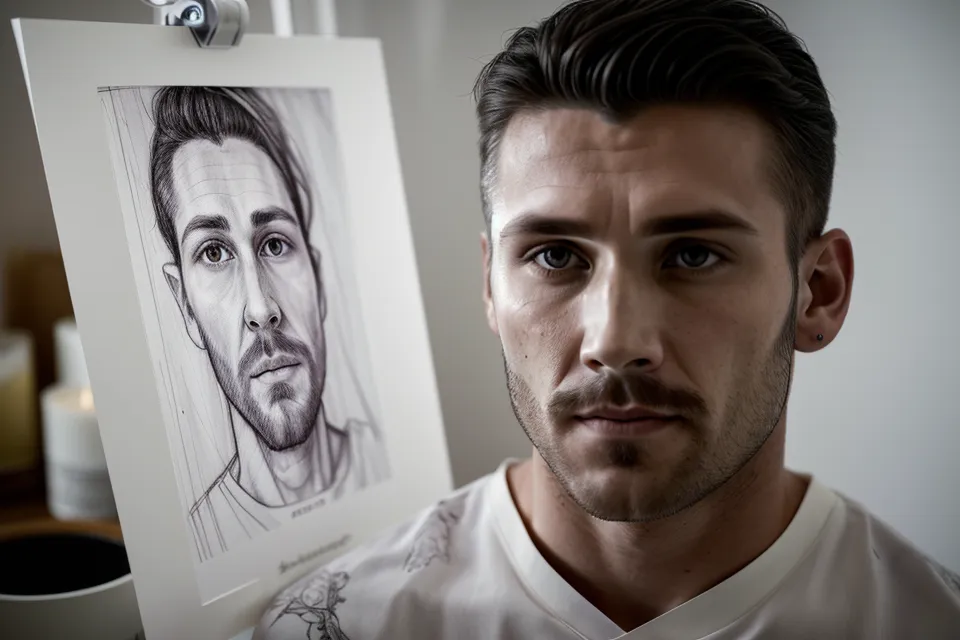
The third sketch, I actually printed instead of just scrolling past it on my phone, mostly out of curiosity about whether paper would change how I read it. It didn't change much, honestly, though holding a printed face felt more like homework and less like doomscrolling. With the fourth one, I skipped printing altogether and just kept dragging my cursor across the image on-screen, zooming into the pencil crosshatching pixel by pixel to check whether the shading was hand-built or something closer to a filter. What did change things was style. One provider sent over a charcoal-shaded digital piece that felt like a portrait you'd find hanging in a small museum. Another sent something closer to a courtroom-style pencil line drawing - for someone you'd actually want to date, instead of someone accused of a crime. Whether a sketch is hand-built or leans on digital shading tools changes how 'real' it feels more than most people expect walking in, and that whole comparison gets its own deep dive if style is what you're actually curious about.
Does Giving Less Information Get You a Better Result?
My first order included my full name and birth date, mostly because I didn't think about it. By the fourth, I gave almost nothing beyond what checkout actually required. The two sketches where I said less felt less like a mirror and more like an actual guess - less generic, less obviously built to match whatever I'd already handed over. That's not a controlled experiment and four data points don't prove a pattern, but it's the one variable I'd actually tell a friend to test herself: hold back the extra context if you want to find out whether an artist is reading you, or just reading your form. I wrote more about how price point affects the whole vibe of a sketch in my honest take on Soulmate Sketch 2.0, which is worth a look if you're trying to figure out whether the cheaper tier is actually worth ordering.
Why the Personality Write-Ups Start Sounding the Same
Every write-up described a man who was grounded, loyal, and good at communication, which is either an extraordinary coincidence across four unrelated companies, or just what everyone wants to hear regardless of who they paid. The split between what some services call a soulmate and what others frame as a twin flame started mattering here, too - one of my four leaned hard on 'intense, transformative' language that read completely differently from the other three, and that specific distinction gets its own full comparison if you want to see how differently those two framings can land. For me, the overlap mattered more than the differences. Four artists, no contact with each other as far as I know, landing on nearly identical vocabulary tells you something about what these services are optimizing for, and it isn't uniqueness.
Red Flags Worth Clocking Before You Pay
Four orders in, I've seen enough to know which details make me trust a service and which make me close the tab immediately, and there's a fuller rundown of warning signs elsewhere that goes further than I will here. Short version: be wary of anyone promising a first name, an exact meeting date, or a guarantee written like a legal contract. If you actually want to compare providers side by side instead of taking one review's word for it, building your own framework the way I eventually did is worth the hour it takes. Mine started as a scrappy spreadsheet and turned into an actual habit I still keep up.
What Didn't Work, Cousin Sketch Included
Not every order earned its keep. The third of the four looked so much like an actual cousin of mine that I put it face-down in a drawer the same afternoon it arrived, and no amount of reframing made that one useful. The sketch that did land for me was the second one, and not because of the face.
I sat on a bench in Rittenhouse Square waiting for Cora, who was running late after bailing on yet another fitness class she'd sworn she'd stick with this time, and pulled up the written backstory that came with the sketch on my phone. I read it twice, then read it out loud, quietly, mostly to check whether it sounded as specific out loud as it had in my head. It did, a little. Not enough to call it proof of anything, but enough to understand why people keep ordering more than one of these.
A reader named Delia once asked me the follow-up question everyone thinks but doesn't say out loud: if the sketches are all promising roughly the same thing, why do people keep paying for a second one, or a third? My honest answer is that it's less about the drawing itself and more about having something concrete to hold up against your own expectations, the same way a personality quiz result feels true right up until you compare notes with three friends who got the identical result. I go into two of those side-by-side comparisons in more depth in my take on the Eva Bloom portrait and in Why I Can't Stop Comparing These Portraits: My Tina Aldea Soulmate Sketch Review, if you want the extended versions.
The One Line Every Legit Service Puts in Writing
Whatever else varies between providers, one thing shouldn't: every legitimate soulmate sketch service states somewhere in its terms that readings are for entertainment purposes only and aren't scientifically validated predictions of any kind. That's the one claim you can actually verify before paying anything, and a service that talks around that instead of stating it plainly is telling you something. If you want a primer on how to sit with the results emotionally before you go through with a first order, without over-investing in whatever comes back, that's covered in more depth elsewhere too.
The reality is this: Judged as a literal preview of a specific future person, no - none of my four were, and I'd be suspicious of any service that claimed otherwise. Judged as a structured way to sit with what you actually want after a bad breakup, all four did something, even the one that's still facedown in a drawer. That's a smaller claim than any service will make in its own marketing, but it's the only one I can stand behind after four separate orders and one corkboard above my sink that's still short a fifth sketch, for now.