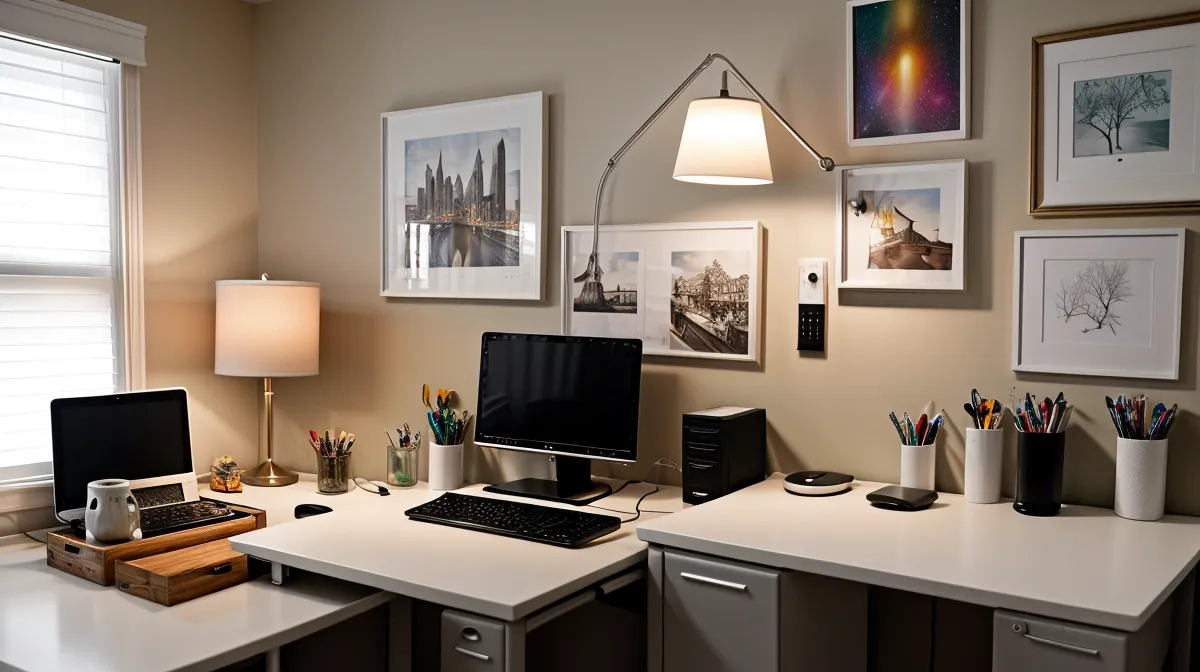
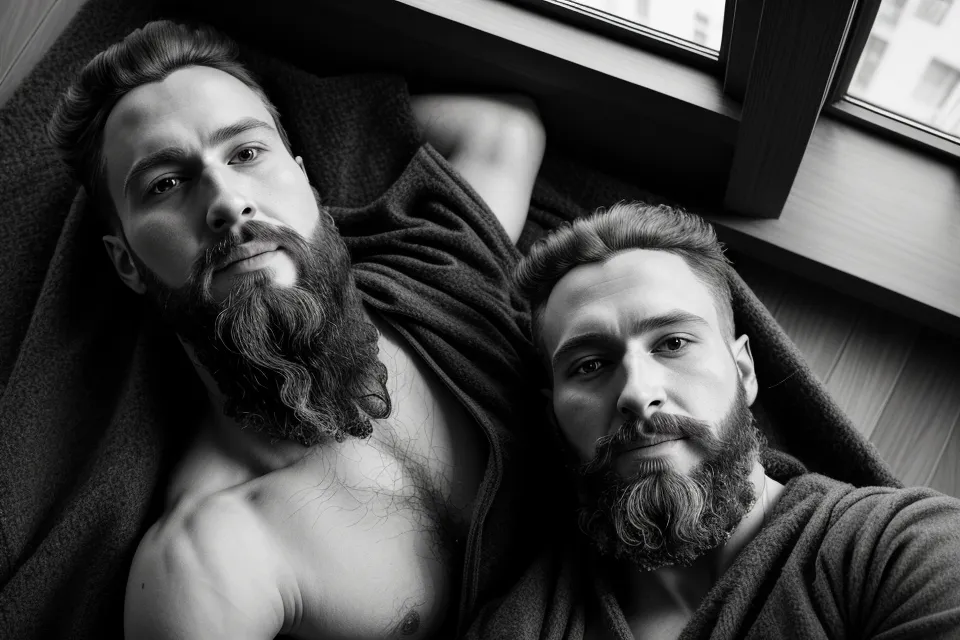
How many of the four "future husbands" currently living in my soulmate sketch collection do you think were actually drawn from scratch, and how many came off some kind of digital assembly line? Three years and four sketches into this strange little hobby, that question still doesn't have a clean answer, but I've gotten a lot better at spotting the fakes.
Here's the position I've landed on after comparing these psychic sketch reviews side by side: at least two of mine almost certainly share the same underlying face. Not a similar face. It's the same bone structure, down to the eye shape, just dressed up with different hair and a different beard. That's not a psychic reading a love story out of the ether. That's a digital template with a costume change.
The Myth Every Soulmate Sketch Site Wants You to Believe
The pitch behind nearly every one of these services is that an artist — sometimes they call themselves a psychic artist, sometimes just an intuitive — is looking at your energy, your birth details, maybe a photo, and rendering a face nobody else on earth will ever get. Cora, my college roommate since our freshman dorm-room days, is the one who talked me into ordering my first one on a wine night, mostly as a distraction from a breakup, and then forgot she'd even suggested it until the file landed in my inbox two days later. She owns four tarot decks she has never actually learned to read, so the whole idea was very on-brand for her. I wasn't expecting a prophecy. I was expecting a laugh and maybe a mildly interesting face to text to the group chat.
Before I ever noticed a template jawline, I'd already tried the long way around — a deep dive into birth chart compatibility, cross-referencing each guy's supposed sun sign and rising sign against my own, looking for some astrological reason four different psychics kept drawing me toward the same type of face. It didn't tell me anything useful. If anything, it just confirmed that I don't understand astrology well enough to use it as evidence of anything.
What Actually Happens After You Hit "Order"
Most of these services land in your inbox as a digital file, typically delivered around 300 DPI, which is just the standard resolution for anything you'd actually want to print. Before they send you anything, they usually ask for your birth date or your sun sign, picking from the same 12 standard zodiac signs every horoscope app uses to sort people into buckets. None of that is sinister on its own. It's basically the same intake process as a personality quiz, just with a face attached at the end instead of a percentage score.
If you're brand new to any of this — a soulmate sketch is basically a psychic's rendering of what your future partner is supposed to look like, handed to you as a file or a print, sometimes with a page or two of backstory attached instead of just a face. How the artists themselves describe actually "seeing" that face is its own strange process I won't unpack here. Delivery windows across my four services have ranged from same-day to well over a week, refund policies are all over the map, and a pricier tier doesn't automatically buy you anything beyond a nicer-looking file. A few of these companies also split their offerings between a "soulmate" sketch and a "twin flame" sketch, which is a whole separate pitch I'm not getting into today.
The Digital Art Comparison That Gave the Whole Thing Away
My own moment of doubt came while lining up two of the sketches on my laptop at 400 percent zoom, checking the shape of a nose on one against the other. The jawlines matched. Not similar. They were identical, right down to the exact curve under the eye, like two different strangers built on the same digital mannequin, assembled inside software like Procreate or Photoshop out of reusable layers instead of drawn fresh each time. Whether a piece started out hand-drawn before any digital work happened is a separate question entirely from whether it's been templated.
Showing a sketch to a room full of friends gets a different reaction every single time, and that reaction tells you almost as much as the sketch does. The night the second one arrived, I passed my phone around the table, and when it got to Cora there was this short, stifled laugh-slash-gasp before she caught herself and asked, flatly, why he had the exact same "kind but tired eyes" as the first guy. For a second that felt like a real coincidence. Then I remembered that "kind but tired eyes" describes roughly every man over thirty in the Philadelphia suburbs, and it stopped feeling like evidence of anything beyond good copywriting.
How Do You Spot the Face That's Been Reused?
A fast turnaround is the first flag worth watching. Plenty of services advertise delivery within about twenty-four hours, which a genuinely busy artist can pull off for one commission a day, but doing a fully custom, from-scratch face for dozens of customers in that same window is a different math problem entirely. If your file lands in under half that time, there's a decent chance you're looking at pre-built assets with a quick costume change, not an original drawing. That's just one item on a longer list of things worth checking before you hand over your card, and it's not even the most important one.
Backgrounds are the second tell. A template face is much easier to drop into a file when the background behind it is a soft blur or flat white, since nobody has to worry about matching lighting or composition to a real scene. The description that comes with the sketch matters too. If yours mentions a guy with "a secret passion he hasn't shared" or someone who's simply "looking for stability," congratulations, that describes every adult human currently alive. And if you zoom in and the eyes are crisp while the hairline turns slightly blurry or mismatched in tone, that's usually two different digital layers getting merged from two different source files.
None of this tells you whether a sketch is "accurate," exactly. How you'd even measure accuracy on something like this is a bigger question than most reviews bother asking, and it's not one I'm answering here. I run my own four services through a separate scoring system entirely from template-spotting, and if you want the fuller method for tracking patterns across a whole stack of sketches, that's a bigger project than one post can hold. There's also a gap worth noticing between the face on the page and the kind of person you're actually drawn to in real life, which a template can accidentally paper over. If you want the longer version of how I ended up with four very different drawings in the first place, here's why I have four different drawings of my soulmate.
What to Actually Do With That Information
Here's the actual rule I use now, four sketches and one template discovery later: if two sketches from different companies share identical bone structure, treat the written description as entertainment and not as insight, no matter how specific it sounds. If the bone structure is genuinely different between sketches, the description is still worth reading for fun, just not for guidance. That one distinction does more work than any amount of zooming in on pixels.
A reader named Delia Ofosu, who emails me more detailed breakdowns of her own sketches than I've gotten from most actual doctors, was the one who first pointed out to me that two of her four drawings shared the exact same nostril shape across two completely unrelated companies. People have apparently been paying someone to sketch a future partner's face for a lot longer than any of these particular websites have existed, which is its own rabbit hole for another day. What you actually do after a sketch lands in your inbox — frame it, forget it, go looking for the jawline on the street — probably matters more than whatever's printed on the page itself.
The Short Version, After Three Years of This
The plain version of this whole thing is that a soulmate sketch is less a prediction and more a conversation starter, closer to a horoscope app notification than an actual look at your future. It gave me something ridiculous to laugh about with friends during a rough stretch, and it made the case, visually, that my ex wasn't exactly a once-in-a-lifetime loss (not that I needed a drawing to tell me that, but it didn't hurt).
There's a real risk in getting too attached to a static image, which is a strange way to treat what's supposed to be relationship fun. My friends and I nicknamed one sketch "Greg from Accounting" purely for convenience, and then found ourselves half-scanning for Greg's jawline on actual strangers. I caught myself doing it once at the Ardmore Farmers Market, half-tuning out a perfectly nice guy bagging my peaches because his jaw wasn't "template-correct." That's not a dating strategy. That's a scavenger hunt for a chin shape, and it's a little bit insane when you say it out loud.
This isn't a replacement for an actual connection or, if you need it, an actual therapist. If comparing sketches starts eating into how you treat real people on real dates, that's worth a conversation with a professional, not another psychic artist. I've gone deep enough into this to write up the full year of comparisons separately, including every service I tried and why I kept going back for more — it's all in the soulmate sketch rabbit hole where I compared all four artists.
The real version of this person, if he exists, almost certainly won't show up looking like a cleanly layered Photoshop file. He'll be asymmetrical, a little inconsistent, and ideally the kind of guy who takes the trash out without being reminded three times. That part, no sketch service I've tried has ever managed to render.