A psychic soulmate sketch and a Magic 8-Ball hand you roughly the same amount of verified information about your love life — the real difference is that nobody prints the Magic 8-Ball on letter paper and pins it to the fridge like evidence.
Mine started after a breakup, the way a lot of these orders apparently do — a cheap, on-a-whim drawing that was supposed to be a joke and ended up turning into four sketches, two different printers, and more reverse image searches than I'd like to admit to in writing.
I only clocked how far this had gone the night two different sketches ended up side by side on my kitchen table, propped against a stack of unopened mail, looking like two men who'd never be caught in the same room together. Below is the checklist version of what happened after that — the real questions people actually ask me, answered one at a time, like a plain digital art review instead of a diary entry. No backstory required, and no, I'm not a psychic.
The File Itself Can Give Away More Than the Reading Does
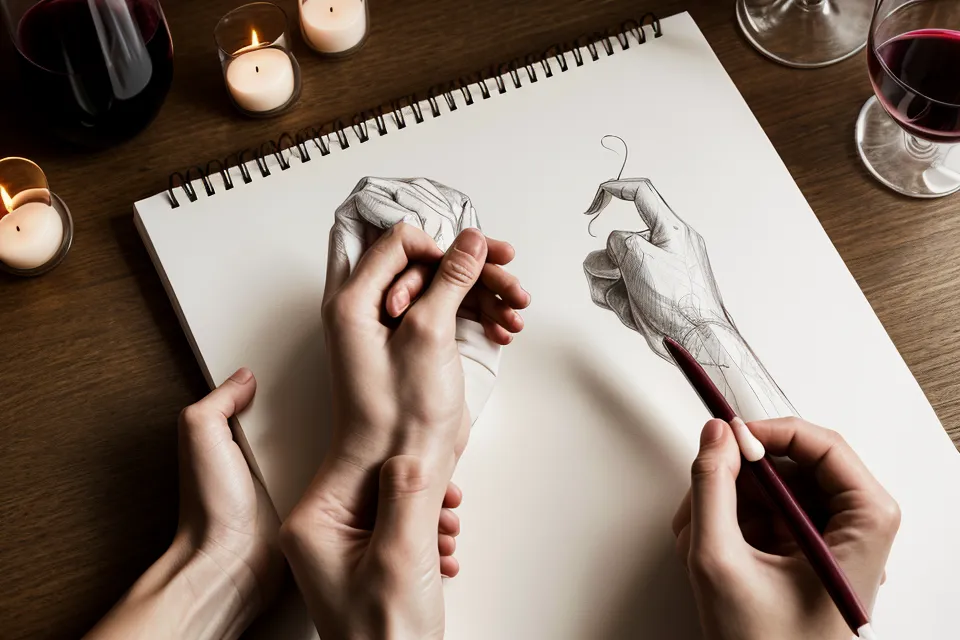
Here's the first thing worth checking, and it has nothing to do with anyone's psychic ability: what format did the sketch actually arrive in? Almost nobody mails you a hand-smudged charcoal piece from a velvet-draped parlor anymore. In practice, a soulmate sketch is usually a digital file — a JPEG or a short PDF sized to a standard sheet of paper — and that alone tells you something about the kind of service you're dealing with.
Open it on an actual computer screen, not just your phone, and zoom all the way in on the line work. A custom illustration, whether it started on paper and got scanned or was built digitally from the start, tends to hold clean stroke weight under magnification. A recycled or rushed file usually doesn't — the hairline turns soft and blocky, edges show compression halos, and the whole image looks stretched well past its original size. None of that proves or disproves anything psychic. It just tells you whether you're looking at a one-off or a mass-produced graphic wearing a custom label.
Some services skip the portrait entirely and send a written story instead of a drawing — same basic idea, different packaging, and worth knowing about going in so you're not disappointed when no sketch shows up at all.
Running a Reverse Image Search on Your Soulmate Sketch
Once the file quality checks out, it's time to play detective for about ninety seconds. Google Lens and TinEye both work by comparing facial geometry — the ratio between the eyes, the width of the bridge, that kind of thing — against billions of indexed images, so cropping just the face and uploading it is usually enough to get an answer.
Three outcomes are worth knowing before you search. The sketch might pull up an exact match on a stock-art marketplace, titled something painfully generic like "smiling bearded man," which tells you the image wasn't made with you in mind no matter what the email said. It might trace back to a B-list actor or catalogue model run through a soft graphite filter — a cheaper shortcut than most people realize. Or the search comes back empty, which is actually the best outcome, since no hits usually means you're looking at an original or semi-custom piece, regardless of how you feel about the psychic framing wrapped around it.
I've written a longer breakdown of what template art actually looks like once you know the visual tells, if you want the side-by-side comparison: how to spot a template soulmate sketch. Whoever is actually producing these — an illustrator, a template editor, something in between — matters less for this particular audit than what lands in your inbox.
Separating Real Detail from Horoscope-Grade Filler
Every sketch comes with a page or two of writing attached, and this is where most people actually get hooked — not the drawing, but the sentence that reads like it was pulled straight out of your diary. Something like: he's loyal, but he's been hurt before and keeps a quiet guard up. Who over twenty-five hasn't been hurt before? That's the Barnum effect doing exactly what it's built to do — making a vague, universal trait feel tailor-made, the same trick a horoscope app or a personality quiz runs at a much bigger scale.
Grab a highlighter, physical or mental, and sort what you're reading into three piles. One pile is universal statements that apply to basically every adult alive: he values honesty, he's guarded, he wants stability. Another is geographic filler so broad it covers every possible scenario, something like "you may meet near water or a busy street corner." The last pile is the one that actually matters — specific, falsifiable claims: a named career field, a sibling, a particular ring on a particular hand. Strip the first two piles away and look at what's left in the third. That number is your real answer.
A reader named Margot Vesely emailed me once after two completely different services sent her nearly identical lines about carrying old wounds from a past relationship — she'd caught the recycled phrasing before I would have, which tells you she's better at this part of the audit than I am. If you want the full filtering method written out step by step, I did that separately here: how to read a soulmate sketch description without getting fooled by fluff.
A Slow Delivery Isn't Automatically a Red Flag
Timing trips people up more than it should. A sketch that takes a while isn't inherently suspicious — plenty of legitimate services batch orders or genuinely spend time on the art — and one that lands in your inbox almost instantly isn't automatically a bad sign either. What's actually worth noticing is the gap between what you were promised at checkout and what happened, and whether anyone responds when you ask a direct question about it.
The real red flags tend to show up around the edges: no way to reach an actual human, a refund or guarantee policy that's vague or buried somewhere in the fine print, or a written reading that feels suspiciously close to one a friend got from the exact same service. None of that requires any psychic skepticism to notice. It's the same due diligence you'd run on any online purchase before you trust it with a card number.
When the Face Doesn't Match Who You're Actually Falling For

This is the part nobody warns you about going in. After collecting a handful of these drawings, none of them matching each other, I started seeing someone whose face didn't resemble a single sketch on file — different hair, different build, nothing lined up — and for one genuinely embarrassing second, I caught myself wondering if that meant something was off with him instead of with the exercise.
That's the actual trap. A sketch is a fixed, two-dimensional image, and holding it up against a real, moving, inconsistent human being will always turn up mismatches, because faces in real life don't hold still the way pencil lines do. Some services frame the result as a twin flame instead of a soulmate, which sounds like a meaningful distinction but mostly just relocates the goalposts — the mismatch problem shows up either way.
What actually tells you something real about a person has nothing to do with cheekbones: how they talk to a waiter, whether you relax in their car, whether your values line up when it actually counts. If a reading taps into anything genuine, it's probably mood and timing, not bone structure. Treating an intuitive read like a passport photo does a disservice to how unpredictable real chemistry is.
Show It to the Friend Who Reads Faces, Not Just Pictures
Showing the sketch to someone else is its own kind of audit, and who you show it to matters more than people think. My friend Phoebe Mull is who I actually trust with this part, because she reads body language better than most people read actual text — she'll glance at a drawing for two seconds and spend the next five watching your face react to it, which tells her more than the paper ever could.
There was a night I held my phone out at arm's length, two portrait photos pulled up side by side on the screen, squinting through the glare trying to spot the difference myself, while Phoebe wasn't even looking at the images anymore. She was watching me. That's feedback a stock-photo detector can't give you.
So What's the Point of All This Cross-Examining?
None of this is really about proving or disproving anything psychic. It's about not handing your judgment over to a JPEG. I also joined a singles hiking meetup that turned out to be a slow loop around Clark Park in West Philadelphia and a lot of forced conversation about trail snacks, and it did roughly nothing for my love life either, so I'm not about to pretend a cheap online drawing is somehow the weakest horse in that particular race.
If you end up with more than one sketch, which happens to almost everyone once the novelty wears off, tracking them side by side is more useful than staring at any single one in isolation. I'd rather weigh four readings against each other than take any one service's word as gospel, and that's the comparison method I use: how to compare multiple soulmate sketches side by side.
Keep the sketch as what it actually is — a strange, occasionally funny artifact from a stranger who's never met the person in question — and let it earn whatever weight you give it after the checks above, not before. None of this changes based on which price tier you paid for, either; a pricier order doesn't automatically mean sharper detail, and a bargain one doesn't automatically mean filler. The drawing can be fun without being gospel. That's really the whole point of asking these questions in the first place.