Four printed faces are taped above my kitchen table right now, and the one with the handlebar mustache is staring at me while I reheat my coffee. This is where my little soulmate sketch experiment ended up: four separate psychic artists, four completely different men, and one very patient corkboard holding the evidence of my post-breakup curiosity. People ask me constant questions about this whole thing once they spot the corkboard on a video call, so I figured I would finally answer the ones that come up most.
Let's get the obvious disclaimers out of the way first. I'm not a psychic, not a medium, and I definitely don't own a deck of Tarot cards — I'm a customer service rep from the Philadelphia suburbs who ordered one drawing on a whim and then could not stop ordering more. A soulmate sketch, if you have never ordered one, is basically a psychic artist's drawing of a person they believe matches your romantic energy based on whatever details you hand over. None of what follows is scientific, and none of it should replace your own judgment about actual, real people.
How Did Comparing Four Different Services Actually Work?
Okay so, there was no fancy rubric involved. I kept a running note on my phone, nothing elaborate, just the date each sketch arrived and my gut reaction before I overthought it, mostly so I would not mix up which drawing came with which backstory by the time all four were sitting on my table. Each intake process asked for something different: one wanted my exact time of birth, another just wanted my 'biggest life goal,' and one asked more questions about my ex than I was entirely comfortable answering. That variety alone told me these four services were not running off the same script.
Most of what I was checking for came down to basic common sense before I even saw a face. I read the fine print the same way I would check a new skincare brand before buying: secure checkout, a real way to contact someone, no sketchy request for extra personal details — and you can read more about buying a soulmate sketch online if that is the part that worries you most. None of these services are regulated the way an actual business like your bank would be, so a little extra caution before you pay goes a long way.
Does the Artist Actually See Something, or Is This Just a Personality Quiz?
Honestly, I cannot verify this from the outside, and neither can you. How these artists actually land on a face, whether it is a genuine impression, something closer to meditation, or educated guessing based on the details you gave them, is simply not something a customer ever gets to see happen. What I can tell you is that it felt less like fortune telling and more like a very elaborate personality quiz, the kind where you answer twelve questions about your ideal vacation and it hands you back a result page, except this result page has a jawline and, in one memorable case, a mustache.
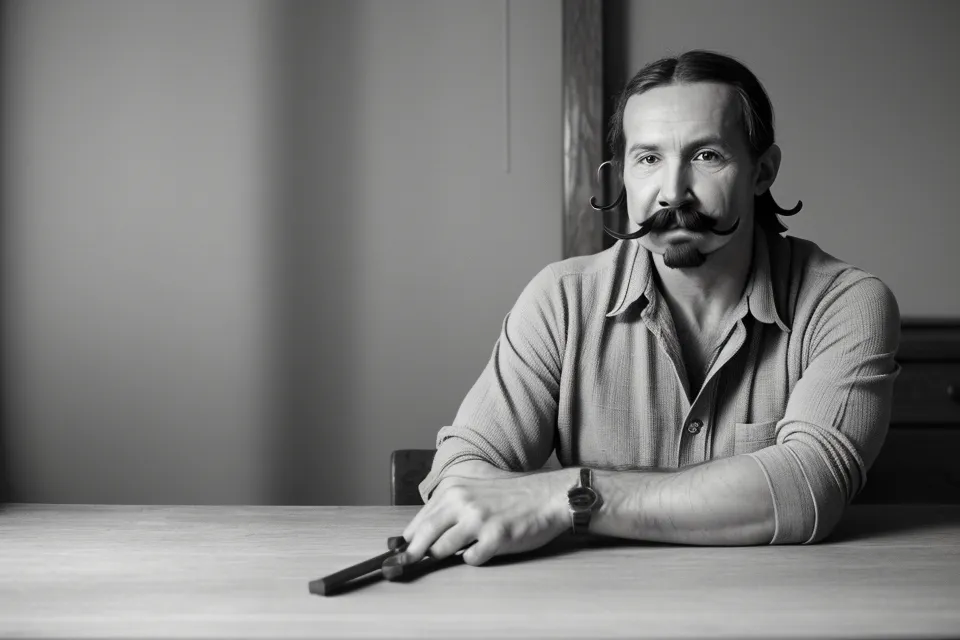
The mustache belonged to sketch number three, and I let out a laugh loud enough that my cat jumped off the sofa. It was a full 1970s handlebar, thick and waxed at the tips, on a face that otherwise looked like it belonged to a mild-mannered accountant. Comparing the four faces side by side, I started measuring things against the Golden Ratio, that 1.618 proportion artists sometimes use for 'ideal' facial symmetry, mostly because I wanted some kind of objective yardstick in a process that has none. Whatever criteria you end up using to judge accuracy — jawline, coloring, general vibe — it still comes down to you deciding how close is close enough.
That same wild variety between the four faces (four different ethnicities, four different ages, one truly committed mustache) made me wonder if some artists just default to a handful of go-to looks. I went looking into how to spot a 'template' soulmate sketch after that, because if an artist is recycling the same three faces for every client, that is useful to know before you pay anyone. It is not proof of anything, but repeated features across unrelated sites would be a reasonable thing to raise with a service directly.
Delivery Windows, Red Flags, and a Reader Named Naomi
A reader named Naomi Ferris messaged me after her very first order ran three days past the estimated delivery window, asking whether that was normal or something to actually worry about. Short delays happen, artists get backed up, life happens, and on their own they are not automatically a red flag. The bigger warning sign is silence: no shipping confirmation, no answer to a direct question, nothing when you follow up more than once. Naomi's artist eventually did respond, and true to her habit, she circled back in my comments six weeks later with a full update on how the finished sketch actually compared to the guy she had started seeing by then.
One of my own four, and I will not say which, never answered a single follow-up question I sent, and that silence bothered me more than anything about the actual drawing itself. Only one of the four services mentioned anything resembling a guarantee or a redo policy up front, and that is something I wish I had asked the other three about before paying anyone.
Digital vs. Hand-Drawn, Twin Flame vs. Soulmate
Two of my four sketches showed up as digital files and two were scanned from an actual hand-drawn original, and I could not honestly tell much difference in how 'real' either version felt once everything was printed on regular paper. Paper texture mattered more to the experience than whether a stylus or a pencil made the original lines, which surprised me going into this.
Terminology varies more than you would expect, too. One of the four services used 'twin flame' language instead of 'soulmate,' and near as I can tell the two terms get used almost interchangeably depending on which site you land on, even though plenty of people online insist they mean very different things. I am not going to pretend there is a universally agreed definition, because every service I tried seemed to define it slightly differently.
Getting My Head Right Before I Hit Order
Preparation, in my case, was basically nonexistent. I did not meditate beforehand, did not write out a list of questions, and filled out most of these intake forms on a lunch break between phone calls at work. If you are the kind of person who wants to sit quietly and set an intention first, that is fine, but do not assume skipping that step ruins anything — the results did not seem to depend on how seriously I approached the form.
I propped the first sketch against my lamp on the nightstand without really deciding to, and for three mornings in a row I caught myself glancing at it before I even reached for my phone. That was less about the man in the drawing and more about the strange novelty of having a specific face to look at after months of just picturing an empty space where a relationship used to be. A thirty-day social media detox, taken on seriously a while back, was supposed to fix that same restless habit of comparing myself to everyone else's highlight reel, and it helped for about a week before I slid right back into scrolling on my lunch break. The sketches did not replace that habit so much as give it a new, far weirder target.
Sketch or Story, and What Josephine Said When She Finally Looked
One of the four came with a short written 'story' attached instead of just a drawing — a page of narrative detail about this imagined person's life — and sitting with that was a completely different experience than just looking at a face. A story gives you something to argue with in your head; a drawing just sits there being a drawing.
Josephine Wachowski, who sits two cubicles over from me at the call center, spent months calling this whole project ridiculous. She finally looked at all four printouts lined up on a slow Tuesday, went quiet for a solid minute, and ended up ordering her own sketch that same weekend. She still keeps a dime in her left shoe for luck and will argue with you for twenty minutes that it is not superstition, so watching her go quiet over a psychic drawing was its own small event in our break room.
What you actually do after the sketch arrives matters more than the sketch itself. Mine mostly ended up on a corkboard instead of changing a single real thing about how I date, and that gap between 'interesting drawing' and 'different behavior' is worth sitting with before you order your first one.
Price Tiers, Patterns, and Whether Your Type Even Matters
The four sketches landed in noticeably different price tiers, and the most expensive one was not automatically the one I ended up liking best. If anything, one of the cheaper ones held up better once I'd stared at all four for a while. Laid out together, a few features did repeat across all four faces: similar eye shapes, similar builds, enough overlap that I started wondering whether that was coincidence or just how certain artists default when they are drawing quickly.
None of the four matched what I would call my usual 'type,' which either means these artists genuinely were not just recycling a stock photo, or that my type is a lot less consistent than I give myself credit for. People have been paying artists to draw future loves for longer than the internet has existed. This just feels like that same old impulse with a contact form attached to it.
So Is the Dining Room Table Gallery Actually Worth It?
Short answer: yes, but not for the reason I expected going in. I took the whole stack with me on a Saturday trip to Peddler's Village in Lahaska, half-joking that I would somehow spot one of these four guys browsing the antique shops. I did not, obviously, but wandering around with four imaginary strangers rolled up in my bag turned out to be a strangely good way to clear my head for an afternoon.
My actual takeaway, if you want one concrete rule: treat the sketch as a mood board, not a photograph from the future. Use it to notice what you're newly open to (a different age range, a different look, a different vibe entirely) and then go close the laptop and actually talk to people instead of auditioning every stranger against four pieces of printer paper. I wrote more about that shift in mindset in my soulmate sketch rabbit hole comparison experience, and the short version is always the same: the value was never really in the ink.