Four soulmate sketches, four different faces, and exactly one of them has a nose that isn't perfectly straight. That small asymmetry ended up mattering more than anything else once I set the digital sketches next to the hand-drawn ones, because "well-drawn" and "realistic" turned out to be two completely different claims, and most of the marketing around soulmate sketch services blurs them into one.
Quick disclosure before the charcoal-versus-pixels breakdown: this comparison includes affiliate links, and I earn a commission if you order through one, at no extra cost to you. I've paid for every sketch mentioned here myself. I'm not a psychic, a medium, or a licensed relationship expert — just someone who, post-breakup, worked through three self-help books about love and relationships that didn't move the needle much, then ordered a soulmate sketch as a joke during a night in with friends because it was, by far, the least serious option on the table. If you're navigating an actual breakup, please talk to an actual therapist — this is meant for insight and entertainment, not decisions.
Digital vs. Hand-Drawn: What Each Medium Actually Delivers
The distinction that actually matters isn't "good art" versus "bad art" — it's what each medium is built to capture. A hand-drawn piece comes out of a physical process, someone working in pencil or charcoal from whatever description or impression they've been given, and physical mediums carry small, unplanned imperfections by default: an uneven line, a shadow that doesn't fully commit to one shape. I've written more broadly about what a soulmate sketch is even trying to do in The Truth About Psychic Soulmate Sketches: My Deep Dive After Four Different Readings, but this piece stays narrowly on the visuals.
Digital sketches skip the handmade step entirely. Software, or an artist working digitally, can smooth, correct, and adjust until the image matches an internal template of "attractive," which raises precision but also raises the risk of ending up with something closer to a stock photo than an actual stranger. Neither approach is inherently more honest — they're just optimizing for different things, the same way a personality quiz and a full intake interview are both trying to describe you, just at different resolutions.
What Hand-Drawn Psychic Art Gets Right (and Where It Falls Short)
Tina Aldea Soulmate Sketch is the one people mean when they ask for "art" instead of just a likeness. Her linework is heavy and textured in a way that reads more like a gallery portrait than a police sketch, and that texture is doing actual work — it's what makes a drawn face feel inhabited instead of generated. The deeper version of my notes on her style is in Why I Can't Stop Comparing These Portraits: My Tina Aldea Soulmate Sketch Review.
The trade-off is precision, not honesty. Because the emphasis sits on mood and texture rather than exact feature placement, a hand-drawn sketch can end up reading like an impression of a person rather than a specific one — closer to how someone might describe a stranger from memory than how a camera would capture them. It also takes longer to arrive, for the obvious reason that shading a cheekbone by hand takes longer than a program rendering the same feature in seconds. How these artists describe actually "seeing" a face in the first place is a process I unpack in a separate piece; here I only care about what ends up on the page.
Where Digital Sketches Surprised Me
Soulmate Story is fully digital, and I expected something between a filtered profile photo and a personality-quiz result: polished, generic, forgettable. By the time the loading icon on an email attachment finally clears, and it always feels longer than it is when you're that curious, you've usually already pictured three different faces, none of which match what shows up. It wasn't like that this time. The sketch caught a specific asymmetry — a nose sitting slightly off-center, one eyebrow a touch higher than the other — and that single unglamorous detail is what made it feel real instead of idealized.
Look, that's the case for digital, honestly: less "soulmate portrait," more a photo of someone you'd actually recognize walking down the street, which is exactly what matters when the question is realism rather than atmosphere. The Soulmate Story sketch is what changed my mind on that, and I go deeper on why in My Suburban Rabbit Hole: Why Soulmate Story Changed My Mind About Psychic Sketches.
Most of these services also send a short written backstory alongside the image, and that paragraph is where the digital-versus-hand-drawn question stops mattering completely, because you're not looking at a face anymore, you're reading a couple hundred words about somebody's personality. I've now read one of those backstory sections twice, and once, quietly, out loud to no one in particular, because a single line about how patient this supposed person would be didn't read like filler. It read more like a well-aimed horoscope app blurb — specific enough to catch you off guard, vague enough to fit half the people you know. My friend Phoebe calls after every sketch I write up, sometimes before I've finished the draft, and her first question is never about the jawline. It's always about that paragraph.
The Budget Option and the Abstract One
Eva Bloom and Soulmate Sketch 2.0 sit at opposite ends of the same digital category, and neither is really competing on realism in the first place. Eva Bloom's approach leans abstract, built around an energy reading more than a literal likeness, so the output feels closer to a mood board than a face you'd recognize on the street. Soulmate Sketch 2.0 is the fast, simple option — a reasonable entry point if you just want to test the concept without committing much, though set next to the others, it reads more like a template than a specific person. Whether that trade-off is worth it gets its own full breakdown in My Honest Take on Soulmate Sketch 2.0: Is the Budget Option Actually Worth It?.
Does Delivery Speed Actually Track with Detail?
Roughly, yes, and the logic is simple: a person working by hand can't move as fast as software compositing features together, so more hand-rendered sketches tend to take longer. I started tracking exact delivery windows service by service after a reader named Margot Vesely emailed me about an order that left her completely underwhelmed, right after I'd posted a glowing review of that same service based on my own experience. The gap between her results and mine is the whole reason I stopped treating a single order as the full story. That full delivery-time ranking lives in its own piece now, separate from any single review. The longer list of red flags worth checking before you pay for anything in this space is its own piece too.
So Which Style Actually Looks More Like a Real Person?
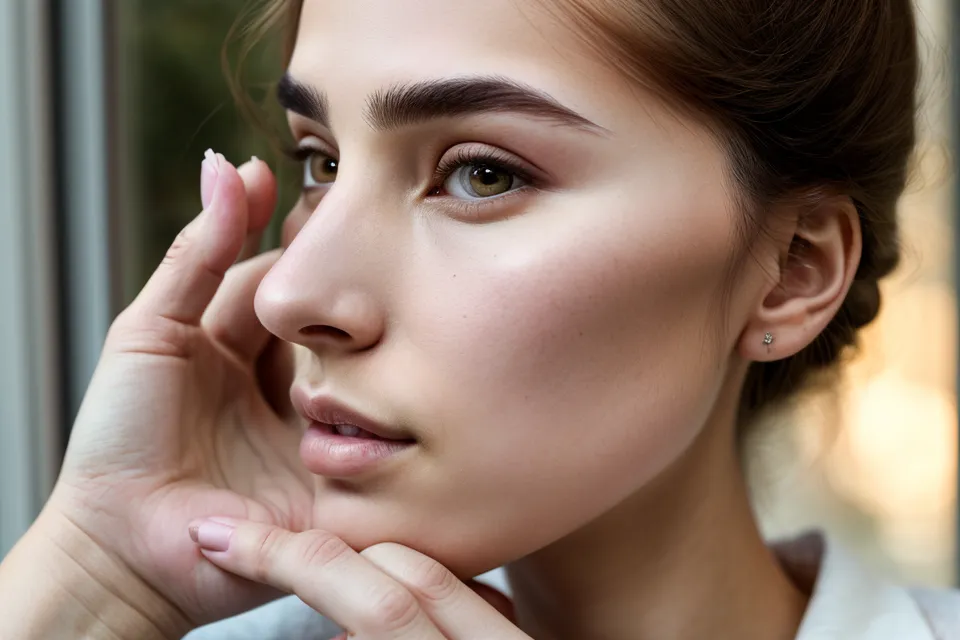
Here's the actual decision rule, not just a vibe: if what you want is emotional atmosphere (a face that feels like it belongs to somebody, imperfections included), go hand-drawn, and Tina Aldea hand-drawn style is the clearest example of that available right now. If what you want is a face you could plausibly pick out of a crowd, specific quirks and all, go digital, and Soulmate Story is what delivered on that for me. Whether the face in a sketch is accurate in the sense of "is this an actual future person" is a separate question with its own scoring criteria, covered in full elsewhere — this piece only judges what's on the page in front of you.
None of this settles whether the person in a sketch is coming soon, already met, or a twin-flame situation instead of a straightforward soulmate one — that's a bigger rabbit hole than jawlines, and it gets its own explanation elsewhere. Getting your expectations in a reasonable place before you even order one is worth doing first, too, and that's its own conversation as well. What I can say for certain is that the Soulmate Story printout is the one that's stayed up longest wherever I've kept it, mostly because that crooked nose still makes me think I'd know the face if I saw it. If you're ready to actually order one, pick based on what you want out of it, not which sales page looks prettiest — the realism argument goes to whichever medium captures a specific, slightly imperfect detail instead of a generically pretty face.