Most people wouldn't trust a total stranger with a tablet to sketch their future partner's face. I certainly wouldn't have either, not before that first soulmate sketch showed up in my inbox and looked nothing like the guy I'd just broken up with, which somehow felt like the most reassuring outcome I could've asked for. Since then I've become the friend everyone forwards their weird online psychic ads to, mostly because I turned what started as harmless relationship fun into an actual habit: testing services, comparing sketches side by side, and figuring out where the line sits between digital divination and an out-and-out con.
A soulmate sketch, if you've never run into the concept, is basically a psychic artist's rendered guess at what your future partner looks like based on a short intake questionnaire you fill out beforehand. Before I ever ordered one, I'd tried the more respectable route first — a thirty-day social media detox, deleting the apps and journaling instead of scrolling — and it fell apart faster than I'd like to admit. Ordering a stranger's drawing of my future husband felt like a joke by comparison, which is exactly why I did it. I've since tested every service mentioned here myself, and this site runs on affiliate links, meaning I earn a small commission if you click through and buy something, at no extra cost to you.
Two Framings Change What You Get From the Same Sketch
Here's the split I keep coming back to. Treat a soulmate sketch like a legally binding forecast (the kind of thing that belongs in the divination world alongside tea leaves and palm reading), and you're setting yourself up to feel scammed the second the face doesn't match reality exactly. Treat it instead as a prompt for reflection, closer to a very elaborate personality quiz, and the same sketch becomes something else entirely.
Most services bury a line in their fine print saying results are for entertainment purposes only, which tells you which framing they expect even if the marketing copy doesn't always match. I used to assume every artist was just running variations on the zodiac's twelve signs and handing back a generic composite on rotation. That turned out to be wrong more often than I expected, though I won't pretend I've got a foolproof method for proving it — I lean on specificity over resemblance when I'm judging whether a sketch actually landed, and I've laid out my full scoring approach for that elsewhere.
Speed Versus Craft: What Digital and Hand-Drawn Delivery Actually Feel Like
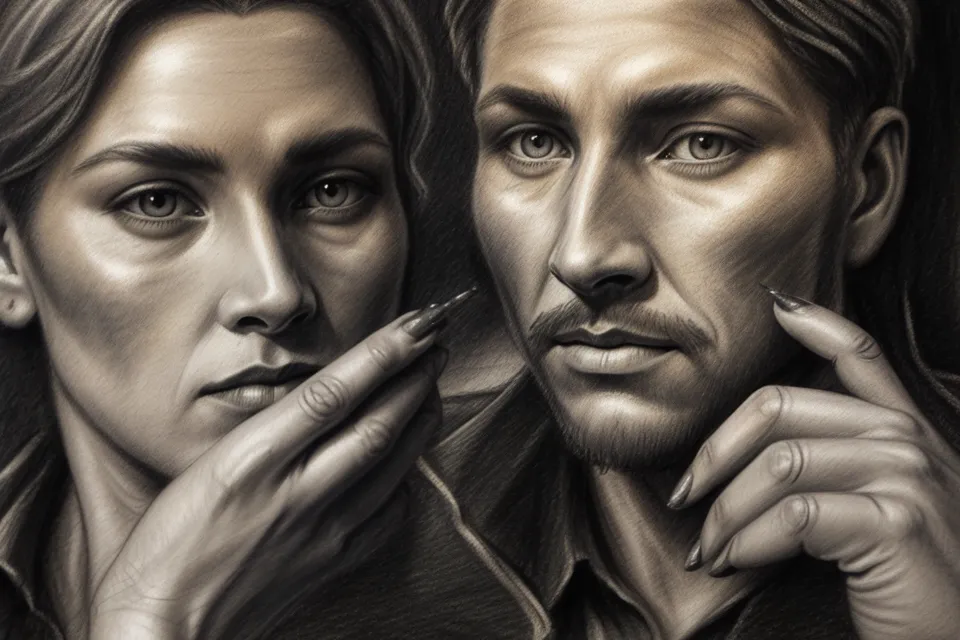
Nobody wants a soulmate sketch delivered by physical mail anymore, and every service I've tried has figured that out. Soulmate Story promises a 24-hour turnaround and actually hits it — mine landed in my inbox before I'd finished my coffee the next morning. Tina Aldea's more hand-drawn process usually runs 24 to 48 hours instead, which makes sense once you picture an actual person sitting with a pencil rather than software assembling a composite in the background.
A reader named Naomi Ferris messaged me once, a little panicked, because her delivery came in three days past what she'd been told to expect, and she wanted to know if that was normal. It usually isn't, though the real red flags worth watching for look less like a slow inbox and more like manufactured urgency — I've broken those down in full elsewhere rather than list them all here. What I told Naomi is what I'd tell anyone: judge the wait against what you're actually getting, because a hand-drawn piece justifying a slower window is a completely different transaction than a rushed template dressed up as personal.
The digital-versus-hand-drawn debate deserves its own deep dive, which I've done separately, but the short version is that speed and texture trade off against each other more than people expect going in. I've also ranked every service's actual delivery window side by side if you want the full breakdown instead of my summary here.
Can a Sketch Work as a Placeholder Instead of a Prediction?
There's a use case nobody really talks about, and it has nothing to do with prediction at all. A friend of mine lost her partner of ten years suddenly, and the standard advice — give it time, get back out there — didn't touch the actual size of what she was carrying. Ordering a sketch wasn't about finding a replacement boyfriend for her. It functioned more like a placeholder, something her brain could look at instead of defaulting back to the same face every time she pictured any future at all.
That's a very different transaction than expecting a forecast, and it only works if you walk in with the right expectations already sorted out, which is its own topic I've written about separately, since how you prepare mentally before your first reading changes what you get out of it more than which service you pick. If you're navigating something closer to grief than curiosity, I put together My Suburban Rabbit Hole: What I Learned After Buying Four Soulmate Sketches after watching that play out, and it goes further into the emotional side than I have room for here.
Watching a Narrative Beat a Resemblance
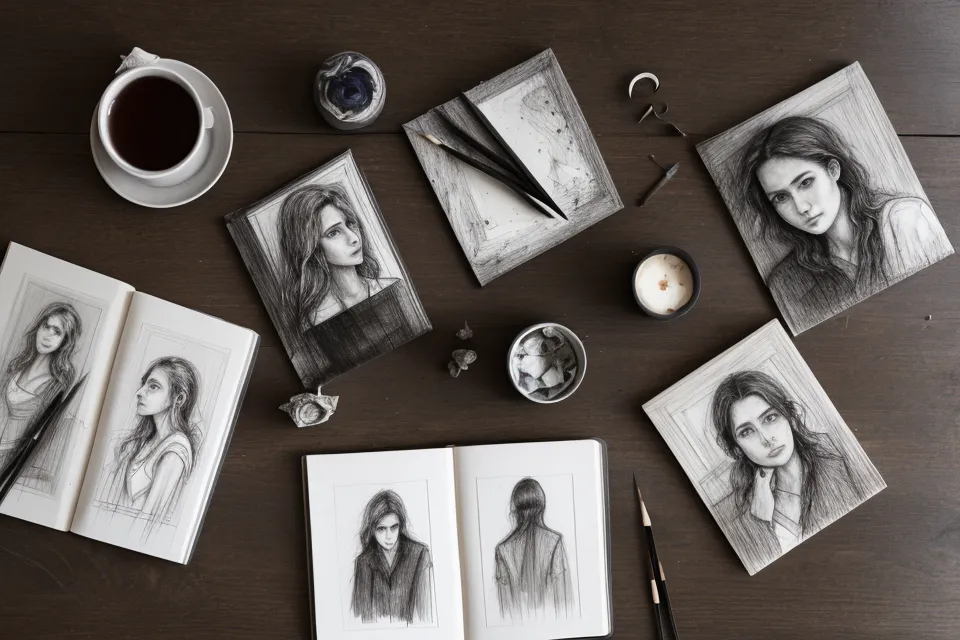
Okay, so here's the specific case that still sticks with me. One reading came back with a full narrative attached — not just a face, but a description of someone who "works with his hands but has a meticulous, almost mathematical mind." I remember replaying the delivery email more than once, freezing it just to zoom in on the eyebrows like that would prove anything one way or the other. Not long after, I ended up talking to a landscape architect at a coffee shop who spent his days drawing precise grids and his weekends building stone walls. Mathematical and hands-on, in one guy, standing right in front of me.
Did he look exactly like the drawing? Not really. But the intensity in the eyes, the overall vibe — that part landed hard enough to make me pause mid-sip. It wasn't the resemblance that got me; it was the narrative being specific enough that it felt less like a coincidence and more like a nudge to actually notice someone I'd normally walk past. How the artists themselves say they land on a face in the first place is a whole separate rabbit hole involving your birth details and a written prompt about your relationship history, and not one I'll unpack here. It's also worth knowing that not every sketch reads as a straightforward soulmate — plenty of readers have written in confused about getting what felt more like a twin flame result instead, which is its own conversation entirely. The Soulmate Sketch Rabbit Hole: My Honest Look After Months of Comparing Digital Psychics gets into a few more of those specific-detail moments if you want more examples than just this one.
Josephine Went From Skeptic to Convert in One Sitting
My coworker Josephine Wachowski works the phones with me at the call center, and for a long stretch she thought the entire soulmate sketch thing was ridiculous — she said so, loudly, more than once, usually during lunch. So I pulled up my laptop folder and put four sketches side by side for her, walking her through the same three-point framework I run every service through now (specificity, delivery speed, gut reaction) so neither of us was just grading on vibes.
Josephine went quiet about halfway through the folder. No gradual coming-around, no hedging — she just stopped arguing, asked a couple of pointed questions about which one I'd start with, and ordered her own that same weekend. I've watched that exact pattern happen with a few skeptics since, and it's honestly more convincing to me than any single sketch has ever been on its own.
The Soulmate Sketch Artist Lineup, Side by Side
If you're picking a starting point, Soulmate Story is still the one I point people toward first. The combination of a detailed psychic portrait with actual personality traits, plus a relationship timeline reading bundled in, gives you more to sit with than a bare face on a page, and it comes backed by a lengthy money-back guarantee if the whole thing lands flat for you. It's not perfect — the results are still someone's subjective read, and there's no live consultation in the base package, so keep an eye on upsells if you're the type who gets carried away.
For the hand-drawn route, Tina Aldea Soulmate Sketch is the one people describe as looking like it belongs in a gallery rather than an inbox. She's built a genuine following for the detail work and pairs it with a fuller spiritual reading, though you're trading a higher price point and that longer delivery window for it, and the style itself won't click with everyone. On the opposite end, Soulmate Sketch 2.0 is the one I'd hand to someone doing this purely for a laugh with friends — it's the most affordable option in the lineup, the process takes almost no input, and it's a genuinely good entry point if you're skeptical and just want to poke at the idea without committing to much. You lose detail and customization for that simplicity, and if I'm honest, the personality read on mine occasionally felt closer to a generic horoscope blurb than anything specific to me — the one real letdown in an otherwise fun lineup of pretty distinct results.
Then there's Eva Bloom, which breaks from the standard portrait format entirely in favor of something more abstract, built around an energy reading component instead of a straightforward likeness. It sits at a mid-range price and carries its own refund window, but it's newer, with less of a track record and fewer reviews to judge it against — worth trying if you're bored of the standard format, riskier if you want proof it'll hold up over time.
So Which Framing Should You Actually Trust?
Neither framing is wrong, exactly — they're just built for different questions. If you want a scientific guarantee, a peer-reviewed anything, a legally binding preview of your future spouse, you're going to walk away feeling scammed no matter which service you pick, because that's simply not the product being sold. (And if you're dealing with real grief or a genuine mental health struggle, please talk to an actual counselor rather than leaning on a sketch to carry that weight — I'm a big believer in real therapy alongside all of this, not instead of it.)
Here's the trade-off, spelled out plainly: choose the fast, budget-friendly digital route when you want something low-stakes to laugh over with friends and don't want to wait around for it. Choose the slower, hand-drawn, pricier option when you want something you'll actually want to look at again later, not just screenshot once and forget. And choose the entertainment framing over the soul-searching one until you've decided, on your own terms, that you're comfortable treating the whole thing as a tool rather than a guarantee, because that shift in expectations changes almost everything about whether the experience feels worthwhile afterward.
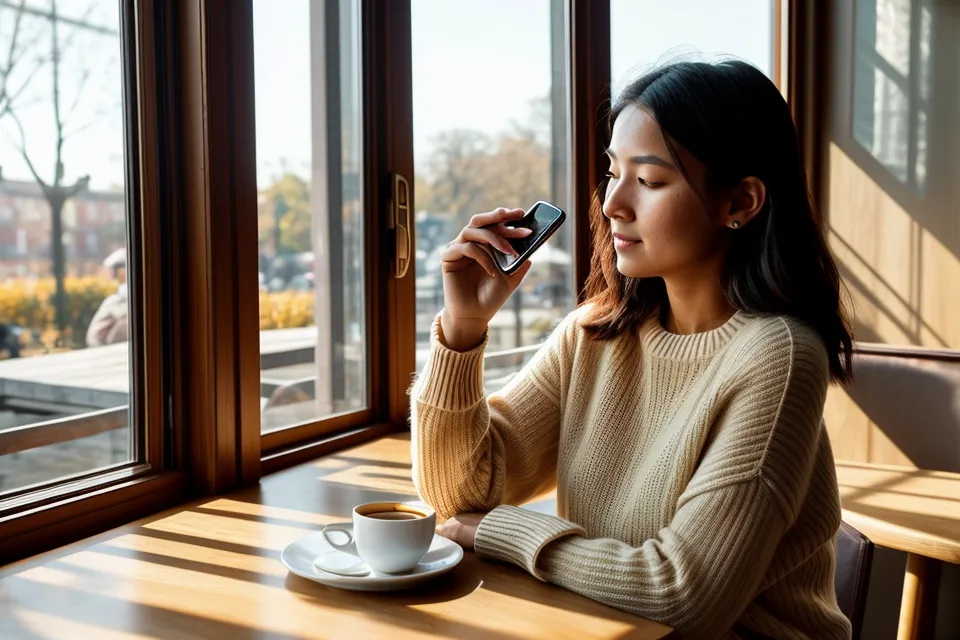
Whether it's genuinely something more or just a very intuitive art form, the value sits in how the experience makes you feel walking away from it, not in whether it holds up under cross-examination. If you're curious where to actually start, Soulmate Story is still my answer — it's the one that gave me the most specific narrative to work with, and that coffee shop conversation turned into a second date. Coincidence, maybe. I'm not exactly complaining about it either way.