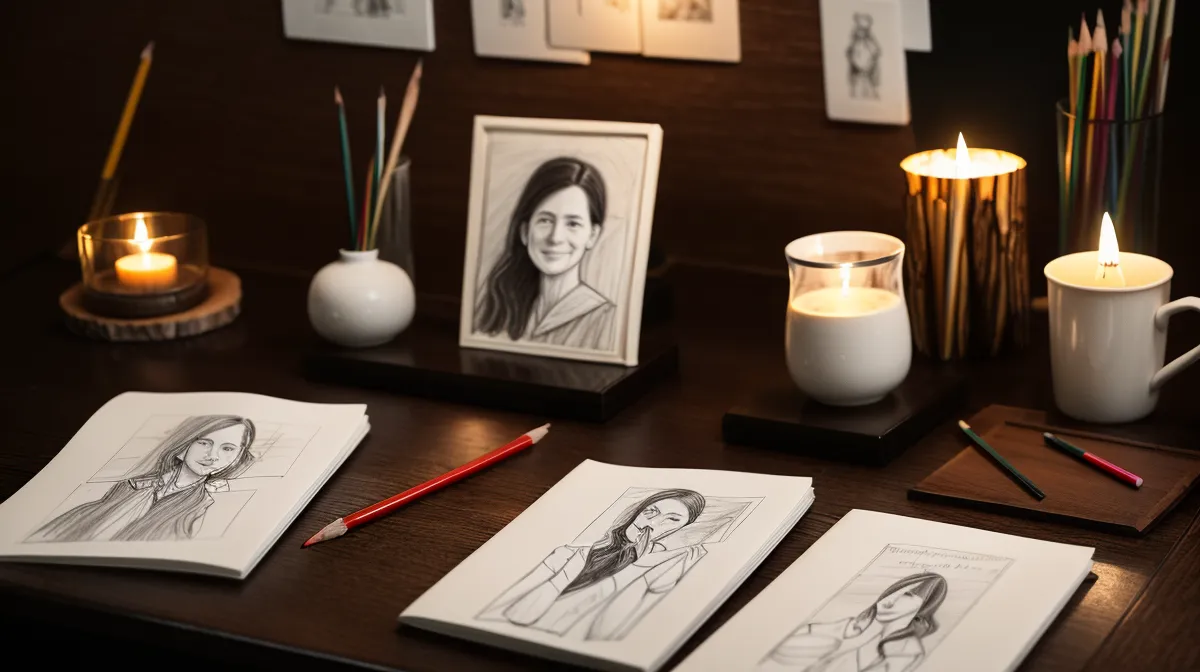
Four sketches, four completely different men, and the detail I kept staring at wasn't the one I expected. When I set the printouts across the round kitchen table I use as a desk, the window over the sink throwing afternoon light across the paper, and lined the first drawing up next to an old photo of my ex, the two men shared nothing: not the jaw, not the hairline, not even the general vibe. That mismatch is the part everyone fixates on after their first order. It's also, it turns out, the least useful thing to judge an artist by.
The things actually worth comparing show up somewhere else entirely — in the linework, in the questions an artist bothers to ask before they start drawing, and in how fast they promise to turn the whole thing around.
Okay so here's the breakdown I wish I'd had before ordering the first one, built from running four different psychic soulmate sketch services against each other and comparing notes with everyone who's messaged me about their own orders since.
Check the Linework Before Anything Else
Start with the portfolio samples, not the sales copy. Every psychic sketch site promises an original, intuitively guided portrait, and that marketing language rarely tells you anything useful on its own. Scroll through an artist's gallery instead and pay attention to how much the faces actually differ from each other.
A drawing that looks like a studio headshot — perfectly even skin, symmetrical features, not a stray pencil mark anywhere — is usually the opposite of a good sign. That kind of polish tends to come from a digital template run through a filter, not from someone who actually sat down and looked at your answers. Hand-drawn work carries the opposite kind of evidence: uneven line weight, a bit of smudged shading, slightly different proportions from one commission to the next. There's a more technical breakdown elsewhere of how a digital rendering differs from pencil-on-paper work at a structural level; for picking an artist, the shortcut is simpler than that — look for the spots where the line doesn't sit perfectly straight. And if twenty different client faces in a gallery all share the same jawline and the same tilt of the head, that's less a signature style and more a shared asset library, which is the clearest giveaway of a templated sketch instead of a custom one.
Josephine — a coworker of mine who keeps a lucky dime tucked in her left shoe and insists that isn't superstition — put it best after I showed her two portfolios side by side: one looked like twenty versions of the same guy, and the other looked like twenty guys who happened to share a last name.
What a Psychic Sketch Questionnaire Reveals About an Artist

Pull up the order form before you pay anything, not after. Some sites ask for little more than your birth date, your sun sign, and your full name — the kind of information you'd hand over to a horoscope app without thinking twice. Others ask what season of life you're in, whether you're rebuilding after something hard, whether you crave stability or chaos in a partner.
That gap matters more than it looks. The questionnaire is a selection signal: how much a service asks up front hints at whether it's actually reading you or just running you through a form. I went into the privacy side of this in more detail in what those psychic soulmate sketch forms actually ask, including which fields are worth skipping. For choosing between artists specifically, the short version holds up fine on its own: a form that only wants data points tends to produce art that feels like data points too.
Why Delivery Speed Can Be a Warning Sign
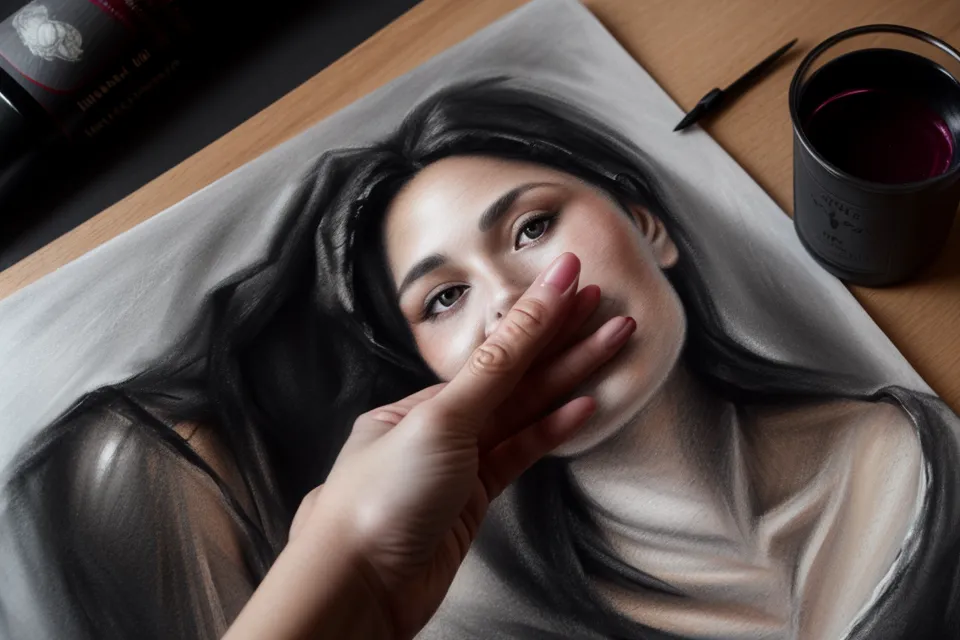
Most honest psychic sketch services land somewhere in the 24 to 48 hour range between order and delivery. That's not an accident — sketching a face, reading an energetic or astrological profile, and writing up a personalized description all take real time, even for someone whose whole job is doing exactly that.
When a site offers a full portrait plus pages of written backstory in an hour or two, ask yourself whether that's actually possible for one person working alone, or whether part of that turnaround was pre-written long before you placed the order.
A reader named Naomi messaged me after ordering from a service I'd mentioned, asking whether it was normal that her sketch showed up three days past the promised window. It wasn't a disaster — three days isn't exactly a betrayal — but it's exactly the kind of slip worth noting, because a service that can't hit its own stated turnaround is telling you something about how it operates behind the scenes, not just about one busy stretch of orders.
The written readings some services bundle in deserve the same scrutiny. If a sample leans on lines like "he has a strong moral compass but sometimes struggles to open up," that's a sentence that could describe roughly every man who has ever lived — vague on purpose, because vague is safer to sell than specific. Specific beats flattering, every time.
Reading the Sketch Without Overreading It
Treat the drawing itself as a prompt, not a prophecy. None of the four sketches I've collected turned out to be a literal match for anyone I've since met, and that's expected — the point was never a GPS coordinate to a specific person's front door.
If you're carrying real relationship anxiety into any of this, talk to an actual therapist, not an internet intuitive — that's not a disclaimer tacked on for legal reasons, it's just true. For everyone else, a sketch works best as a character study: something to hold up against your own patterns and ask what you actually want, rather than something to scan for in literal strangers' faces.
I broke down how the written companion piece some services sell alongside the drawing holds up on its own in a review of the soulmate story features after ordering online, if you're deciding between the sketch alone and the sketch-plus-story bundle.
The single test that's held up best across all four services is simpler than any of the above: does the portfolio feel like it could only have come from someone who actually read your specific answers, or could the exact same packet have landed in any other client's inbox with a different name swapped in? Everything else — the linework, the questionnaire, the delivery window — is really just evidence toward answering that one question.